East-West Setting for a Pear Cut: Does It Look Lopsided?
A pear-shaped stone already has a strong point of view: one rounded end, one tapered tip, and a silhouette that looks a little like a teardrop. Turn it sideways in an east-west setting and the question arrives quickly: does it look chic—or lopsided?
The short answer: an east-west pear ring can look beautifully balanced, but it won’t look symmetrical in the conventional, “everything points up” way. Its balance comes from thoughtful proportions, secure setting details, and how the ring sits on your hand. If you love a less traditional silhouette, that asymmetry may be the point.
Before you decide, it helps to understand what changes when a pear cut goes horizontal, what to look for in a setting, and how to make the design feel like yours rather than a trend you’ll outgrow.
What Is an East-West Pear Ring?
In a traditional north-south arrangement, a pear-shaped gemstone is worn with its point aimed toward the fingertip. In an east-west setting, the stone is turned sideways so its point faces toward one side of the finger. That simple rotation creates a different outline: wider across the hand, more graphic, and often less immediately recognizable as a classic engagement ring.
An east-west pear ring can be set horizontally across the band, or at a slight angle for a softer, more relaxed effect. The ring might feature a single stone, small side stones, or a band designed to trace the pear’s contours. Each choice affects how balanced the finished ring appears.
It’s one of many ways couples are breaking engagement ring traditions. The center stone doesn’t have to be round, the band doesn’t have to be plain, and the proposal doesn’t have to end with a design that looks like everyone else’s. Still, a distinctive shape deserves a little extra attention to fit and construction.
Does a Horizontal Pear Engagement Ring Look Lopsided?
It can—but “lopsided” is not an inevitable result of the cut. The pear itself is intentionally asymmetrical. The rounded end carries more visual weight, while the point gives the stone direction. Turn it sideways and the eye notices that difference more readily, especially if the tip looks unsupported or the stone sits off-center.
A well-designed horizontal pear engagement ring usually feels deliberate rather than uneven. The stone is aligned thoughtfully with the band, the setting supports the point, and the proportions suit the wearer’s hand. When those things are right, the silhouette reads as sculptural and modern—not like the gemstone slipped during setting.
What influences the balance?
- The stone’s proportions: A long, narrow pear can look sleek across the finger, while a shorter, fuller pear may feel more compact. Neither is automatically better; they simply create different visual effects.
- How the point is oriented: A tip aimed toward the thumb or toward the little finger can make the ring feel different on the hand. Try both directions if you can.
- The setting’s support: The pointed end needs secure protection. Prongs, a partial bezel, or a custom-shaped frame can help protect the tip while keeping the design light.
- The band and shoulders: A band that flows naturally into the stone can make the whole ring feel cohesive. A very narrow band beneath a large stone may exaggerate the stone’s visual weight.
- Your hand and daily habits: Finger length, neighboring rings, and how often you use your hands all affect comfort and practicality.
Here’s my very unromantic but useful test: look at the ring from above, from the side, and while your hand is relaxed—not posed like a jewelry ad. Then ask how the band feels between your fingers. A beautiful silhouette is only half the job; a ring that pinches, rotates, or catches on every sweater sleeve will get old fast.
Choosing a Pear Cut Setting That Works
The best pear cut setting is not just the one that looks striking in a product photo. It should hold the gemstone securely, suit the stone’s proportions, and feel comfortable for the person wearing it. Because a pear has a vulnerable tip, protection deserves particular attention in an east-west design.
Prongs
Prongs can keep the design airy and let plenty of light reach the stone. For a pear, the tip should have a protective prong or another thoughtful guard. Ask the jeweler how the point is secured and whether the prongs are likely to snag on clothing. I keep a running mental list of settings that catch on knits, and exposed, delicate points tend to earn a second look.
Bezel and partial bezel settings
A bezel wraps metal around some or all of the gemstone’s edge. A full bezel can give an east-west pear a crisp, contemporary outline and offer extra protection. A partial bezel leaves more of the stone visible while shielding selected areas, such as the tip. The trade-off is that a bezel changes the look of the stone and may make it feel visually bolder.
Custom contours and side details
A curved band, small accent stones, or a subtle metal frame can connect the pear to the rest of the ring. These details can help the design feel balanced without trying to make the stone look perfectly symmetrical. If you’re considering a wedding band, try the engagement ring with a straight band and a shaped band. Some east-west settings leave a gap beside a straight band; others are designed to sit flush.
Modern ring design is full of expressive silhouettes, but the setting still has to work in real life. Ask about cleaning, repairs, resizing, and how the ring will wear over time—not just how it photographs from one flattering angle.
Metal, Color, and Storytelling
A pear cut doesn’t have to be a diamond. Colored gemstones can make an east-west design bespoke-bride.com feel personal in a way that goes beyond choosing a different shape. A teal sapphire might recall a favorite coastline; a green stone might connect to a family garden or a meaningful place. The story doesn’t need to be grand. Sometimes the color simply makes you happy when you glance down at your hand.
Consider how the gemstone color will sit against the metal. Yellow gold can make warm-toned stones feel richer; white metals can create a cooler, sharper contrast; rose gold brings its own warmth. These are visual tendencies, not rules. Look at samples in different lighting, because a stone can shift in appearance indoors, outdoors, and under store lights.

Colored stones also vary in hardness and durability. Ask a qualified jeweler how the specific gemstone handles everyday wear, what care it needs, and whether the east-west setting leaves any vulnerable edges exposed. “Gemstone” is not one durability category, so get guidance on the actual stone you’re considering.
Bespoke Design: Make the Asymmetry Yours
If you love the idea of a horizontal pear but can’t find one that feels quite right, bespoke design can solve the in-between details. You can choose the stone’s proportions, decide which way the tip faces, adjust the band width, and explore different ways to protect the point. Custom doesn’t have to mean complicated. Sometimes one small change—like a slightly wider band or a lower setting—makes the ring feel unmistakably right.
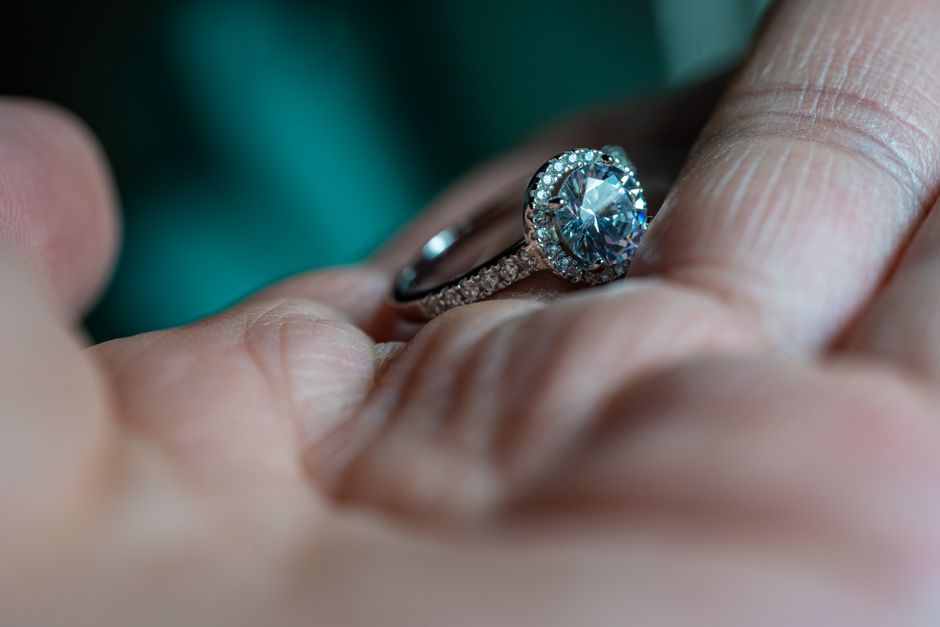
When working with a jeweler or designer, bring clear references and clear questions. Pinterest boards for ring inspiration are useful for spotting patterns in what you like: perhaps you keep saving low-profile settings, sculptural bands, or colored stones. But treat images as a starting point, not a promise that every feature can be combined in one ring. A jeweler can explain which proportions and construction choices will work together.
Brands such as Lily Arkwright can be part of your research when you’re comparing contemporary ring styles and customization options. Look closely at the actual stone specifications, setting details, and service policies rather than relying on a single styled image. And if you’re shopping across different price points, Modern Gents is another name couples may encounter while browsing accessible, fashion-forward ring options. Compare materials and construction carefully; a similar-looking silhouette can differ in what it’s made from and how it’s intended to be worn.
For a more editorial approach to wedding style and planning inspiration, Bespoke Bride can help spark ideas beyond the ring itself. The goal isn’t to copy a complete look. It’s to figure out what feels like you, then make decisions that work together.
Questions to ask before ordering
- How is the pear’s pointed tip protected?
- Can I see the ring from the top and side, or try on a similar setting?
- Will the stone sit low enough for my daily routine?
- Does the band feel comfortable between my fingers?
- Will my preferred wedding band sit flush, or will it leave a gap?
- What are the care, resizing, repair, and return policies?
- Can you explain where the gemstone and metal come from, and what sourcing information is available?
That last question matters. If a brand answers with vague promises but no useful details, keep asking. Ethical sourcing claims are worth understanding before you buy, not just after you’ve fallen for the photos.
Is an East-West Pear Ring Right for You?
An east-west setting is a strong choice if you like modern silhouettes, want a ring that feels distinctive without relying on a huge stone, or simply prefer a shape that sits across the finger. It may be less suited to someone who wants a traditional, point-toward-the-fingertip look—or who strongly prefers a symmetrical design.
Before you commit, consider these practical questions:
- Does the shape feel like you? Try on a horizontal pear if possible. A photo can’t tell you how the outline will look on your hand.
- Can you live with its character? The stone’s asymmetry is part of its appeal. If you keep wishing the point were centered or the ends matched, another cut may feel more satisfying.
- Does the setting suit your routine? Check the height, point protection, and potential for snagging against your usual clothes and activities.
- Have you planned for the wedding band? Test the pairing early. You don’t need to choose a band at the same time, but it helps to know what will fit.
- Do you understand the purchase? Get the stone details, metal information, maintenance guidance, and policies in writing. Talking about budget and sourcing doesn’t ruin the romance; it helps make the decision with confidence.
Final Verdict: Lopsided or Lovably Asymmetrical?
A pear cut turned east-west does not have to look lopsided. It does have an intentionally uneven silhouette, and the right design celebrates that instead of disguising it. The secret is proportion, secure construction, and a setting that feels balanced on your hand—not an attempt to force a pear into a shape it isn’t.
Try different orientations, pay attention to the band between your fingers, and ask direct questions about the stone, the setting, and sourcing. Whether you choose a classic diamond, a colorful gemstone, or a bespoke design, the best ring is one you’re excited to wear on an ordinary Tuesday—not just one that looks striking in a proposal photo.
And if your Pinterest board is full of sideways pears? That’s not a sign you’re being difficult. It’s a useful clue about the kind of ring that feels like yours.